
The Pastel de Nata: One of the World's Best Desserts
Until this day, I have met exactly one person who told me she did not like pastéis de nata. She was American, of Portuguese descent, and to this day, she remains the only exception I have ever come across. Everyone else, everywhere, seems to agree on this one thing.
Those who know me well know one thing about me: I don't like cinnamon. Which makes me one of the very few Portuguese people you will ever meet who eats a pastel de nata without “canela”. Ask anyone here, and they will tell you the same thing I would tell you about almost anything Portuguese: there is a right way to do it, and everyone has an opinion about what that is.
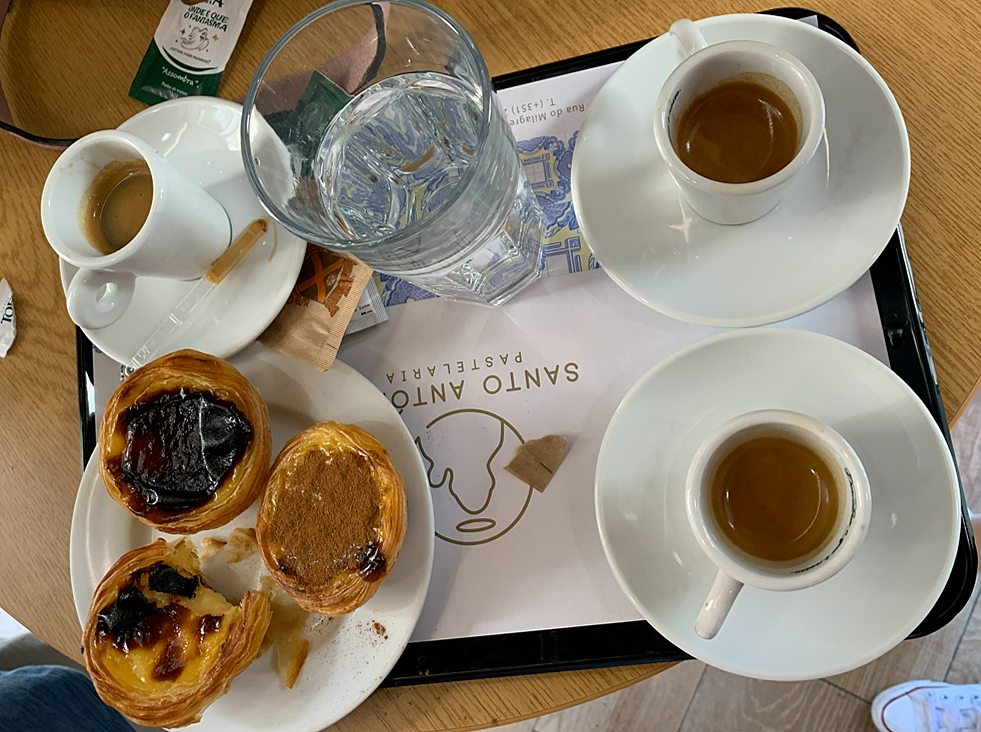
Pastel de nata and a “café”, the right way to enjoy it.
A quiet controversy, and my honest opinion on it
In the last few years, as more visitors arrive looking for the pastel de nata they read about online, a strange thing has started happening in some of the busiest parts of Lisbon and Porto. Bakeries near the main squares now sell versions filled with Nutella, matcha, dulce de leche, pistachio and even bacon. Some come dusted in gold leaf. It photographs beautifully.
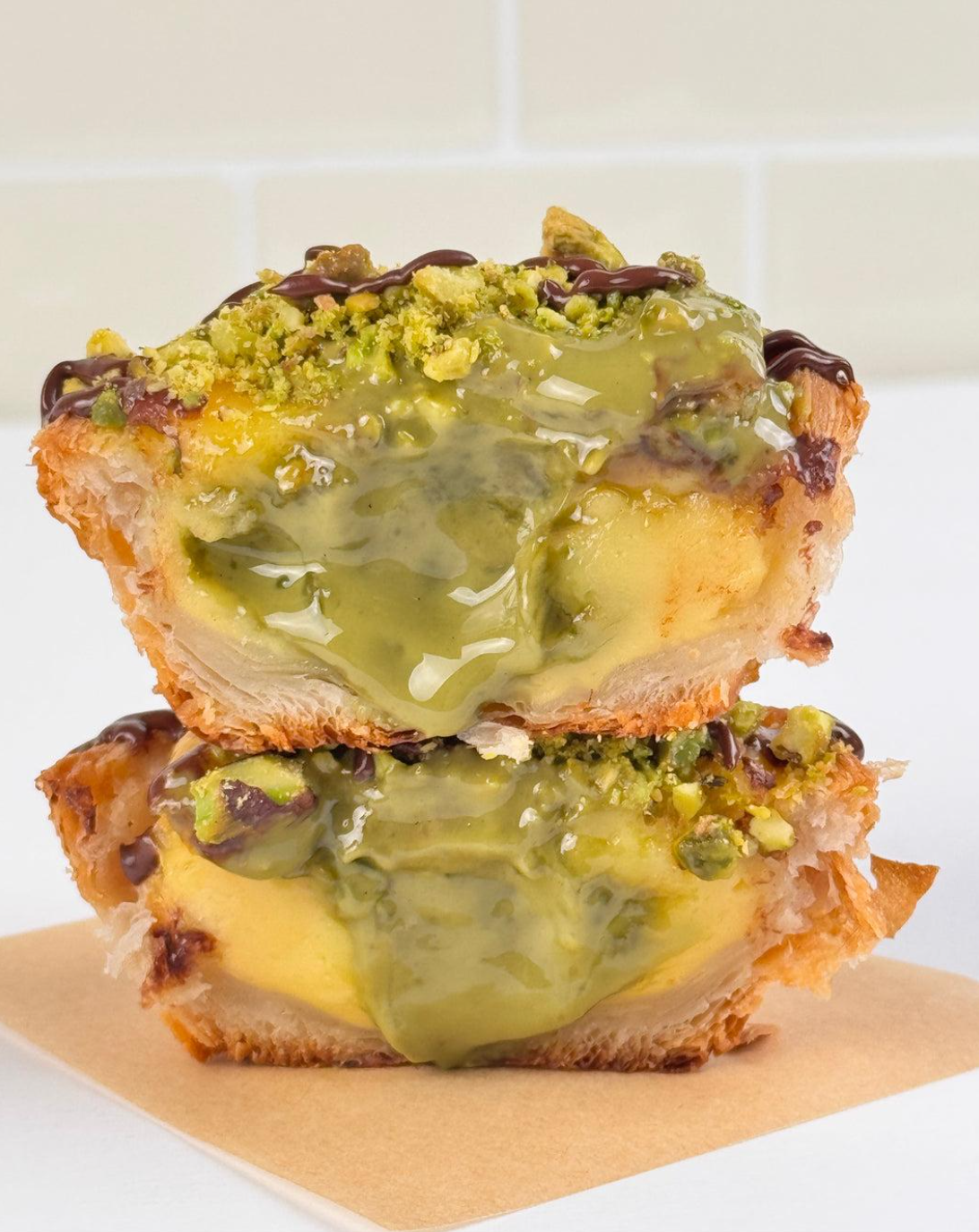
Pastel de Nata with pistachio.
In my opinion, this is exactly where it goes wrong. A pastel de nata does not need reinventing.It needs egg yolks, sugar, cream, and pastry made properly, the same way it has been made for two centuries. The moment you start adapting it to whatever trend photographs well that season, it stops being a pastel de nata and becomes a tourist souvenir with a Portuguese name attached. It loses what made it worth travelling for in the first place.
This is a small thing, but it is not a small point. The whole idea behind a trip designed properly is finding the version that has not been adapted for the tourists, the one that is still made the way it always was, for the people who actually live here. This is the Olive way.
A recipe born out of necessity, not ambition - the story behind it
The pastel de nata was created by monks, at the Jerónimos Monastery in Lisbon, sometime before the 19th century. Convents at the time used large quantities of egg whites to starch habits and clothing, which left an abundance of egg yolks behind. Rather than waste them, someone turned them into a custard, folded into delicate, flaky pastry.
It is a very Portuguese kind of story. Something valuable made quietly, out of what was simply available, without any particular plan for it to become famous. The tart only reached the wider public after the monasteries closed in the 1830s, when the recipe passed into civilian hands and eventually into a small bakery near the monastery that still exists today, still making it largely the same way.
Pastel de Belém vs Pastel de Nata
Technically, only one place in the world is allowed to call its custard tart a "Pastel de Belém": the bakery next to the Jerónimos Monastery, where the recipe has been kept secret since 1837. Everywhere else, what you're eating is a "pastel de nata", made from the same idea, with its own recipe.
A few years ago, my mother stood in that very queue at Pastéis de Belém, minding her own business, and looked up to find Morgan Freeman standing right in front of her. Neither of them said a word. They just exchanged a small, knowing smile, the kind two people share when neither one wants to make a scene. Then the queue moved, and so did they. She never told anyone at the time. Some moments are better kept as a quiet story for later than interrupted by a phone camera and a crowd.
Local tip: If you go, there are two ways in. The main queue, the one that wraps around the corner, is only for people who want to sit down inside, and the room is large enough that it moves faster than it looks. There is a second, quieter door just to the left of the main entrance, for takeaway, no queue required.
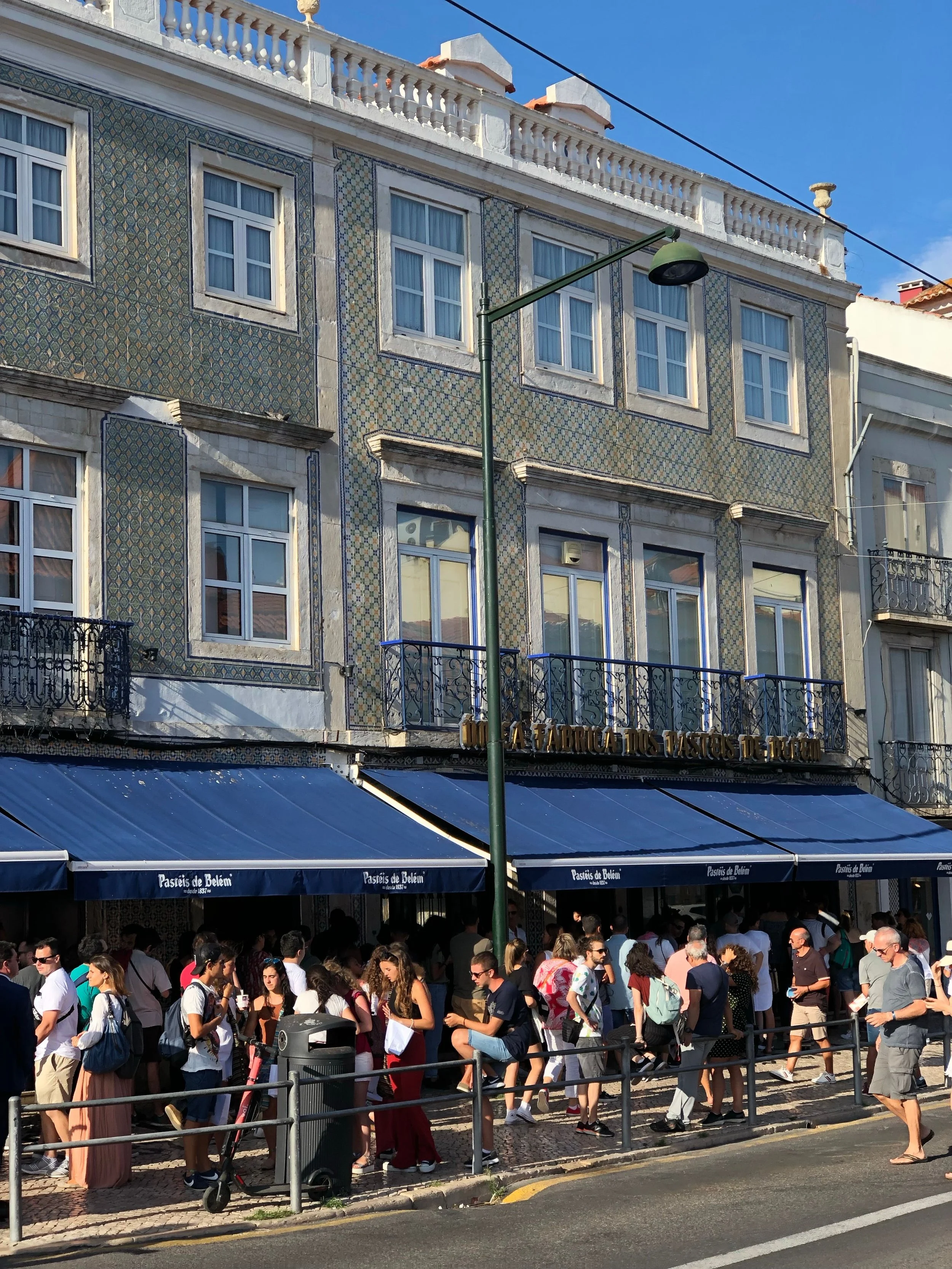
Pastéis de Belem, in Lisbon, where the recipe has been kept secret since 1837.
Olive stories
The last place I expected to find one
The last place I ever expected to find a pastel de nata was a night market in Bangkok. It was 2019, and I was there with a portuguese colleague from the crew, in the middle of an around-the-world stretch working in the airline industry. We had twenty four hours in the city and were determined to make the most of it, and, as it happened, we spent the day exploring together, glad for the excuse to speak our own language for a while.
By early evening, hungry and probably slightly lost, we wandered into one of those open food markets Bangkok does so well, dozens of small stalls, each serving something different, with a shared seating area in the middle. I was going stall to stall trying to work out what was actually Thai food and what I recognised, when, tucked between trays of local pastries, there they were: pasteis de nata, sitting in a market on the other side of the world as if they had always belonged there.
I already knew, about Portugal's old habit of quietly leaving its mark on faraway places. Finding a tray of pasteis de nata in a Bangkok night market is what made that idea feel real. It is one thing to read that Portuguese influence reached across the globe. It is another to stand in front of proof of it, entirely by accident, thousands of miles from home.
A birthday gift in Johannesburg
The story I tell most often, though, happened two years earlier, in Johannesburg, on the 13th of December, 2017. It was my birthday, and my first year working in aviation. We had flown in the evening before, and as was often the case on this layover, the crew went out for dinner together, this time somewhere well known near Nelson Mandela Square. Because the flight had technically landed on the 12th, we ended up celebrating right at midnight, my first birthday spent properly far from home, and a very happy one.
The next morning, I was still half asleep when the phone in my hotel room rang. It was the captain. He told me he had left something for me at reception, a small birthday surprise, and hoped I would like it. When the bell rang and I opened the room door, I was handed a small paper bakery bag by the hotel staff. Inside it, pasteis de nata!
It is hard to explain properly what that felt like, waking up on the other side of the world, away from home for one of the first times, to find the most Portuguese thing imaginable being handed to me just like that.
The influence never really stopped
Thailand and South Africa are not isolated cases. In Macau, bakeries sell their own version, usually a little less sweet than ours. It is tempting to assume that is simply a hangover from the old Portuguese colony, but the real story is more interesting: the version that became famous was popularised in the late 1980s by Andrew Stow, a British pharmacist living in Macau, after tasting the real thing on a trip to Portugal. Portuguese chefs had already been making the authentic version in the city long before that, but it was Stow's adapted recipe that turned it into a local icon.
It is the same pattern we see again and again: tea in England, tempura in Japan, and now custard tarts turning up quietly on menus from Bangkok to Guangzhou, sometimes because of Portugal directly, sometimes because of someone who fell in love with it along the way. Portugal rarely gets the credit for any of it in the moment. It just keeps showing up, generations later, in someone else's kitchen.
A ritual, not just a recipe
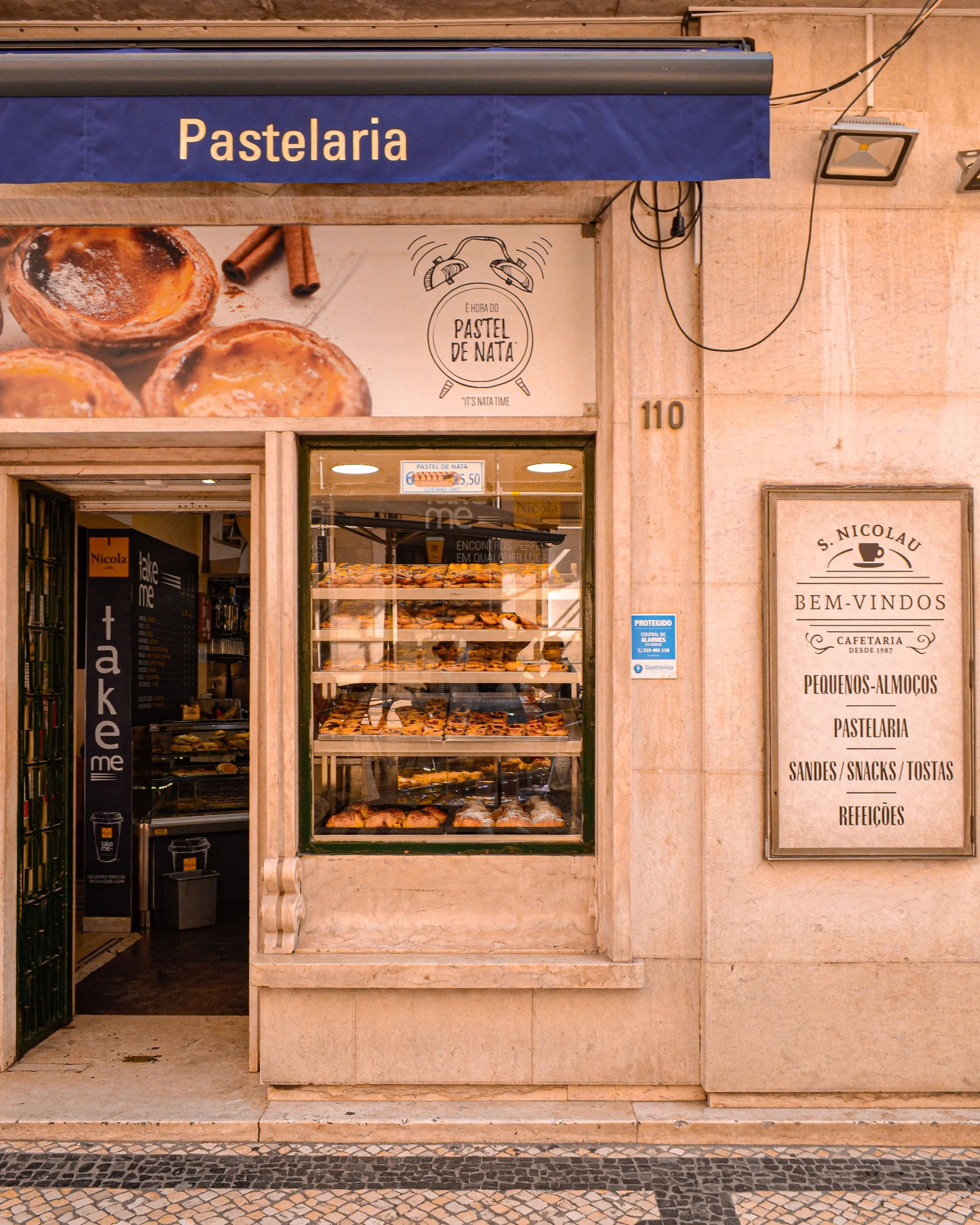
In Portugal, eating a pastel de nata is rarely a rushed affair. It is an excuse to sit down mid-morning, with a coffee, at a small marble-top table, and let ten minutes pass slowly. You will see locals doing exactly this at nine in the morning, in no hurry at all, treating the pause itself as the point.
“Pastel de nata” always goes with a “café”
A pastel de nata never really travels alone. Ask any Portuguese person, and it always comes with a coffee alongside it, no exceptions. What might catch you off guard is what "coffee" actually means here. In Portugal, if you ask for a “café”, you get an espresso, small, strong, no questions asked. It is simply assumed. If what you actually want is what most Americans picture when they hear the word coffee, something longer and milder, you need to ask specifically for a “café americano”. Otherwise, you will end up, quite happily, with a strong and small espresso you never technically ordered.
An invitation to slow down
This is worth remembering if your own image of "dessert" comes from somewhere you have to eat standing up, or on the way to somewhere else. Here, the tart comes with permission to simply sit for a while. Perhaps it reminds you of a slower Sunday afternoon from a version of life that moved a little less quickly than it does now.
By then, you are already experiencing what it means to be Portuguese.
Not every pastel de nata is equal, and the best ones are rarely the ones nearest the busiest square, or the ones dusted in gold leaf for a photograph. Some of the finest versions still come from small, unassuming bakeries that have made them the same way for decades, with a queue of regulars rather than tourists. Finding them without wasting an afternoon of your trip walking in circles, and without settling for the Nutella version because it was the only one nearby, is exactly the kind of small detail a good local guide takes care of.
Where to get it from
Here is something most visitors never learn: not all Portuguese bakeries are the same. A pastelaria often sells bread and pastries baked overnight, sold the next day, which is not always as fresh as it looks. A confeitaria makes things fresh, in small batches, throughout the day, sometimes still warm by the time it reaches the counter. If you remember only one word from this article, make it that one.
In Lisbon, when I am not at Belém, my own pick is the Confeitaria Nacional, by Praça da Figueira, one of the oldest pastelarias in the city, open since 1829. In Porto, it is Manteigaria, right by Mercado do Bolhão, with a Delta coffee on the side, still the best cup I have had anywhere in the country.
Eat as many as you want, enjoy!
It also helps to know that a pastel de nata, of all things, is not the guilty indulgence people assume it to be. A standard one runs somewhere between 180 and 250 calories, depending on size, well under a bolo de arroz or a queque, which sit closer to 400. Even a traditional French croissant typically contains more calories than a classic Portuguese pastel de nata.
So the next time someone tells you to skip dessert in Portugal, you are free to point out they are skipping the wrong one.
A small thing worth pausing for
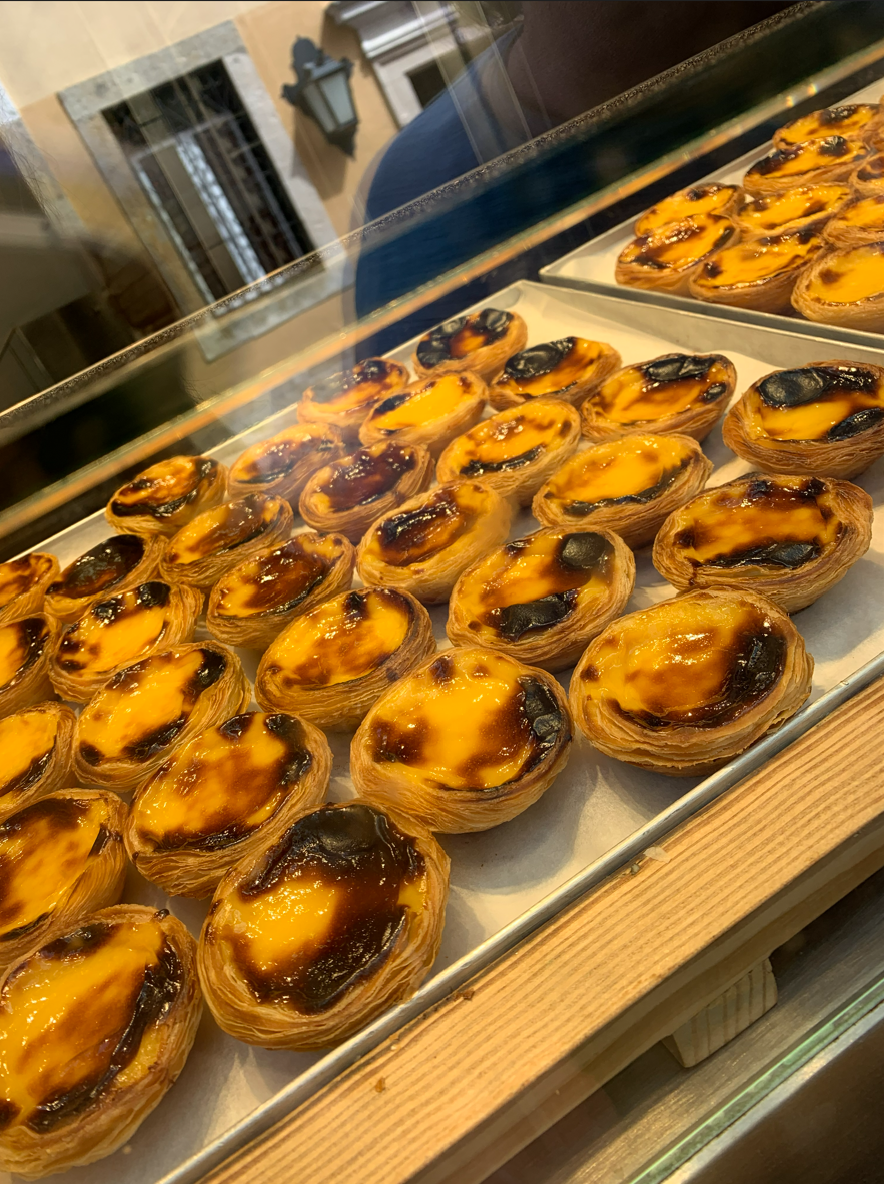
Pastéis de nata at Pastelaria Santo António, in Lisbon.
The next time you are offered a pastel de nata, in Portugal, Bangkok, Johannesburg, or anywhere else, it is worth remembering it began as a practical solution in a convent kitchen, long before anyone imagined it would end up compared to the finest pastries in the world, or turn up, unannounced, on the other side of the planet. Sometimes the most memorable things are not the ones designed to impress. They are the ones made with care, left alone long enough to become exactly what they were meant to be, and somehow still capable of surprising you decades later in a market you never expected.
Do you want your next trip to Portugal designed by someone who knows the country as well as those navigators once knew the ocean, so all you have to do is enjoy it? Scroll up and talk to Olive.
